Winterising: the guide to protecting your pool properly
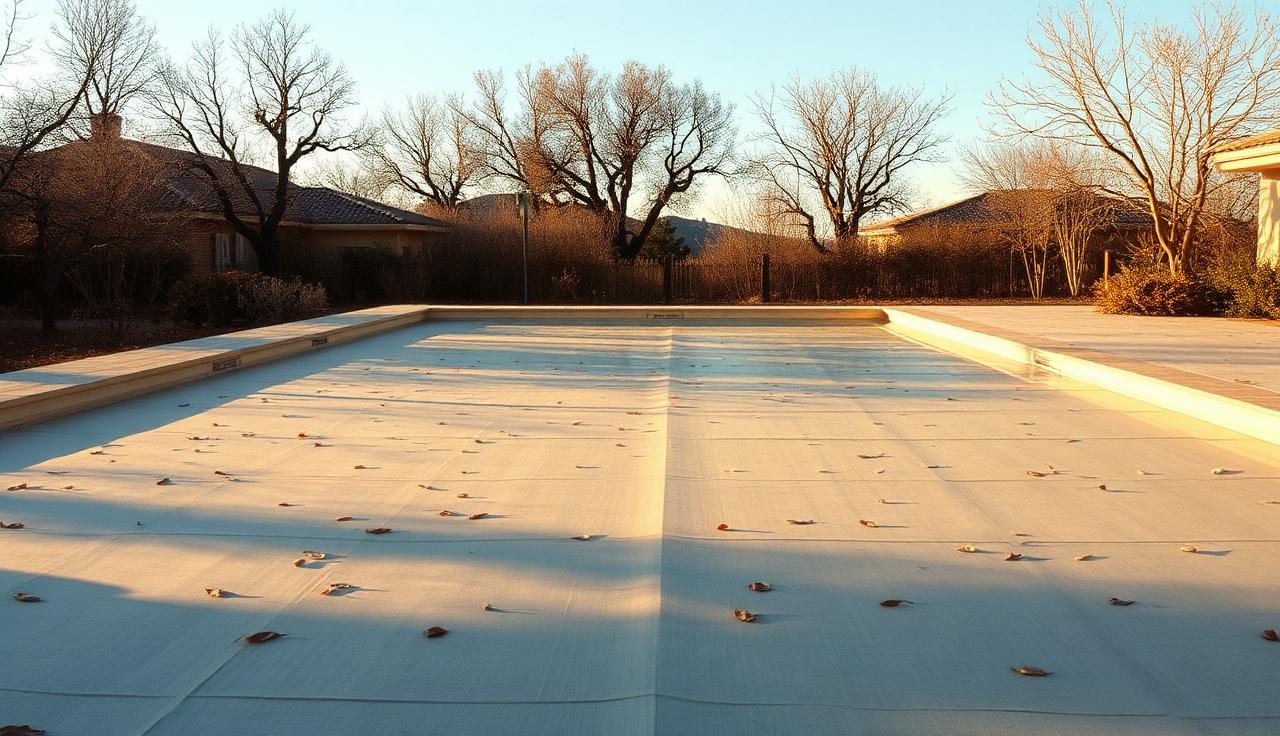
In the Var, winterising isn't the same story as it is in Lyon. Frost stays rare, and the water almost never drops below 5 °C. As a result, **active winterising** is almost always enough, and it makes the spring start-up much simpler. Here's how to do it properly.
Active or passive: which to choose in the Var?
- Active winterising: filtration runs a few hours a day, water keeps circulating, avoiding frost and algae. Suited to our region.
- Passive winterising: everything's shut down, drained and protected. Essential above 1,000 m altitude, rarely useful on the Var plains.
Active requires a bit more attention but makes the spring start-up much easier. It's our default recommendation.
When to winterise?
The marker: water below 12 °C for several days in a row, generally mid-November in the Var. Winterise too early, and you let algae settle into still-mild water. Too late, and you risk a cold snap on unprotected equipment.
The steps of active winterising
1. Test and rebalance the water (pH first). 2. Shock treatment with unstabilised chlorine. 3. Winterising product: neutralises limescale and algae for 4 months. 4. Deep clean the filter (not just a backwash). 5. Lower the water level below the return jets. 6. Programme filtration: 2 to 4 hours a day, ideally during the coldest hours in automatic frost-protection mode. 7. Winter cover or closed submerged shutter.
Passive winterising: when and how
For the rare Var pools at altitude, or if you cut the power all winter:
- Drain the pipework and pump.
- Winterising plugs in the skimmers and return jets.
- Gizzmos in the skimmers to absorb frost pressure.
- Opaque cover to block photosynthesis.
The spring start-up will be heavier — plan for a full day.
The mistake to absolutely avoid
Never fully drain your pool for winter. The weight of the surrounding ground can lift or deform the structure, especially on in-ground panel pools. An empty shell is more fragile than a full one.
The same goes for the liner: it dries out and cracks if left exposed to dry air for more than a few days.
Free photo diagnosis
Not sure which type of winterising suits your pool? Our free diagnostic points you in the right direction in 3 minutes.
3 minutes, no sign-up. You get an initial view and a clear recommendation — no strings attached.
Start my diagnosisFrequently asked questions
How much does winterising a pool cost in the Var?+
€199 all-inclusive for a complete winterising: cleaning, products, frost protection for the plant room and fitting the accessories.
Should you keep testing the water during winter?+
Yes, once a month. A quick check of pH and water level is enough. That's what avoids bad surprises in spring.
What to do in case of exceptional frost?+
Put filtration into continuous mode until the cold snap passes: circulating water doesn't freeze. Most recent panels do this automatically (frost-protection mode).
Can you winterise a pool yourself?+
Yes, but getting the winterising product dosage right and programming filtration are the two points where a professional makes the difference. Many clients leave winterising and the spring start-up to a pool professional, then handle routine maintenance themselves.
The related service
Winterising
Protect your pool for a worry-free winter.
199 € · 1 hr 30 to 2 hr 30
Related services
Also worth reading
How to restart a pool in spring?
A well-done spring start-up means a stress-free season. Here's how.
Read6 minHow often should you maintain your pool?
Understand when and how to step in to cut down on both work and products.
Read4 minWhy cleaning your filter changes everything
A dirty filter means water that forgives less. Here are the right reflexes.
Read