Why has my filtration stopped working?
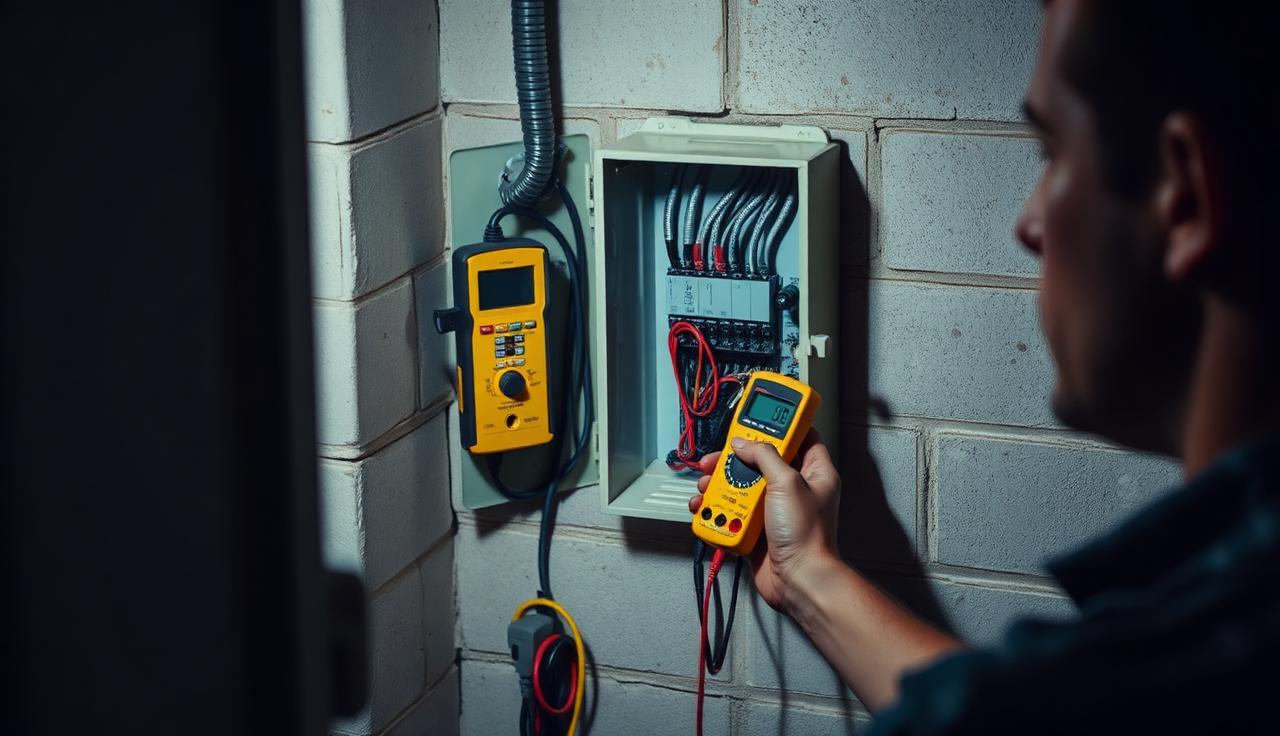
Your filtration has stopped, or it's running but no longer filtering. Before calling anyone, here are the 5 most common causes — in order of likelihood — and how to check them without dismantling anything. Half of them are fixed in 10 minutes.
Cause #1 — A clogged pre-filter
Turn off filtration and unscrew the pump's clear cover. If it's full of leaves, insects or olive-tree pollen (common in the Var), that's your culprit. Empty it, rinse it, check the seal, and put it back together.
Restart it: if the pump gets its flow back, that's the problem solved.
Cause #2 — An air leak
Visible bubbles in the pre-filter or in the pool near the return jets? The pump is sucking in air instead of water.
Check:
- Water level too low (below the skimmers).
- Pump lid seal dried out or damaged.
- Skimmer / vacuum valve in the wrong position.
A pump that keeps losing prime often ends up overheating, then burning out.
Cause #3 — Breaker or RCD
The pump doesn't start at all? Check the electrical panel:
- Dedicated pool breaker in the down position.
- 30 mA RCD that has tripped (moisture safety device).
If the breaker trips again as soon as you restart it: don't force it. There's an electrical fault (often a light or the pump itself), and each forced restart makes things worse.
Cause #4 — Saturated filter
Filter pressure 0.3 to 0.5 bar above the reference pressure: the filter is saturated. Do a backwash (sand filter) or clean the cartridge.
If the pressure doesn't come back down after washing, the sand is probably clogged (typically every 4 to 5 years) or the cartridge is at the end of its life.
Cause #5 — Pump at the end of its life
Metallic noise, vibrations, quick overheating, gradually dropping flow: the pump is coming to the end of its run. A pool pump typically lasts 8 to 12 years.
In that case, a professional will tell you whether a pump repair (seals, impeller) is enough, or whether you need a replacement. Often changing the seal or impeller avoids a full replacement.
Free photo diagnosis
A breakdown and you don't know where to start? Send us a photo of the plant room and we'll point you in the right direction in 3 minutes.
3 minutes, no sign-up. You get an initial view and a clear recommendation — no strings attached.
Start my diagnosisFrequently asked questions
How much does a fault-finding visit cost?+
€189, a fixed price announced before the visit. If the repair is approved afterwards, this amount is deducted from the final quote.
My pump is noisy, is that serious?+
A new, metallic or vibrating noise often points to a bearing at the end of its life or a priming fault. Get it checked quickly: a pump under strain fails fast.
The pressure gauge reads zero, is that normal?+
No. Either the pump isn't running, or the pressure gauge is faulty (very common, it rusts over time). Before panicking, check visually that the pump is running and the return jets are moving water.
How long does a repair take?+
Most common faults (seal, pre-filter, pressure gauge, valve) are fixed in 1 to 2 hours on site. A full pump replacement takes 2 to 3 hours.
The related service
Fault-finding
Understand what's not working, without the guesswork.
189 € · 1 to 2 hrs
Related services
Also worth reading
Should you repair or replace your pool pump?
A good diagnostic often avoids a full replacement.
Read5 minMaintaining and repairing your filtration system
From the 6-way valve to the filter sand: the whole ecosystem explained.
Read5 minSpotting and locating a pool leak
How to know whether you're really losing water, and what to do next.
Read