Renovating a concrete pool: cracks, coating, liner
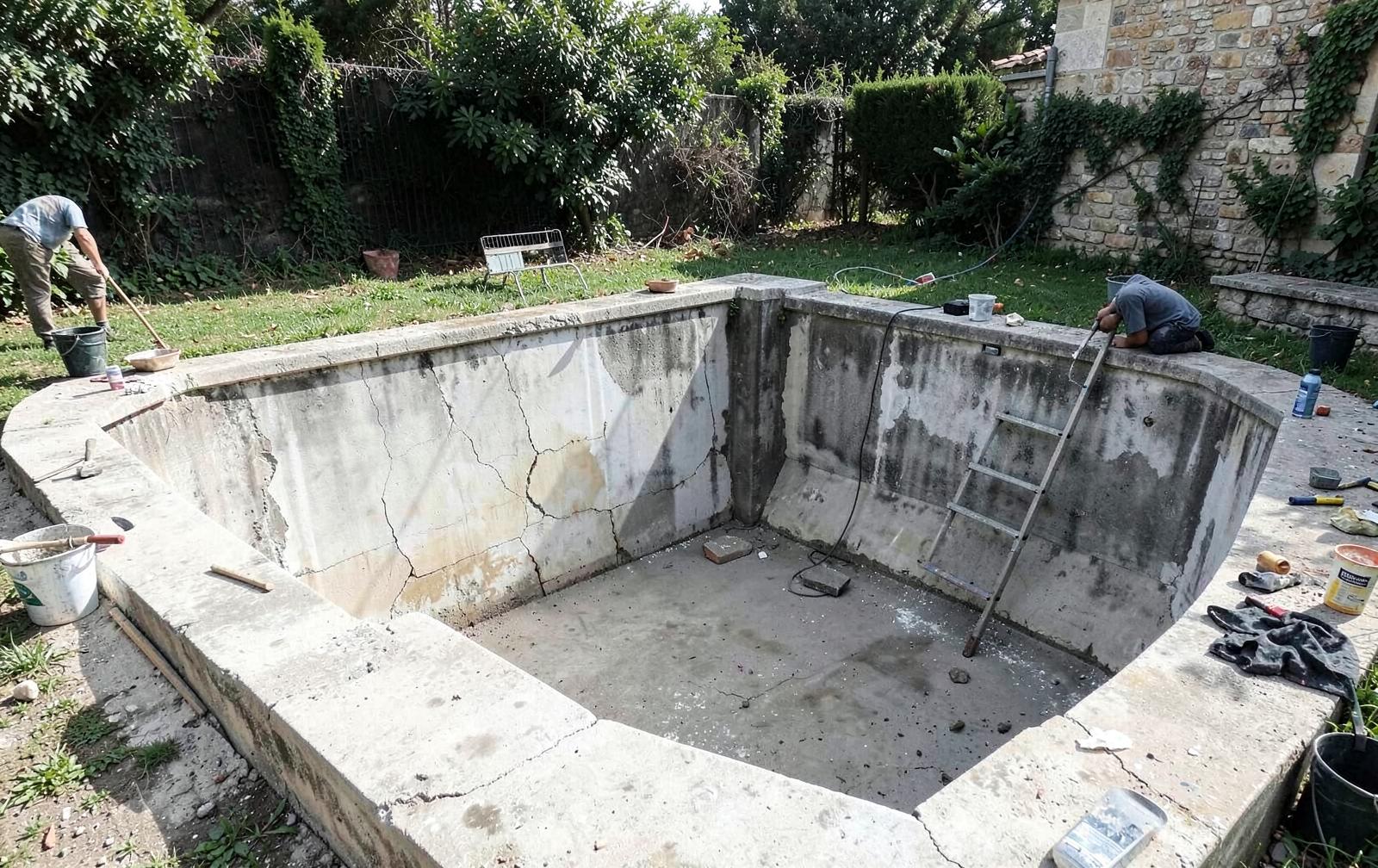
A concrete pool that is cracking, peeling, or losing its coating is not finished — far from it. It is actually the most repairable structure that exists. Here is how we give a second life to a concrete basin in the Var, step by step, and how to know if your pool needs it.
How to recognize if a concrete pool needs renovating?
The signs are unmistakable:
- Visible cracks on the walls or floor, fine or open.
- Coating that is peeling, blistering, or coming off in patches underfoot.
- Water loss greater than normal evaporation (more than 3 mm per day).
- Black or rusty stains that return despite brushing — often structural reinforcements starting to work.
A single one of these signs doesn't mean 'major work'. But it deserves a professional look, because a crack treated early costs ten times less than one that migrates.
Structural crack or coating crack?
This is THE question that determines everything else.
A coating crack stays on the surface: it doesn't move and is mainly unsightly. It is addressed during the coating renewal.
A structural crack goes through the concrete. It can move with the seasons, let water pass, and worsen. In the Var, clay soils that swell and shrink with drought are often the cause. It requires specific treatment: opening, packing, sometimes stapling, before any finishing.
This is exactly what we check during the technical visit: we never apply a finish to a diseased structure.
The three main finishing options
Once the structure is sound, we choose the basin's new skin:
- Coating (marbrex, silico-marble): the traditional result, smooth and luminous. Good lifespan, easy maintenance, but requires careful application.
- Liner: the fastest and most economical solution. A custom-made membrane installed in a few days. Perfect for a sound basin whose appearance you want to refresh.
- Reinforced covering (reinforced PVC): thicker and more resistant than a liner, welded on site. The right compromise for a basin that has experienced leaks.
The right choice depends on your basin, your budget, and the desired look — this is the core of the discussion during the technical visit.
How does the site work, concretely?
A typical Pool-Hero project:
1. Technical visit and diagnostic of the structure (link to our pool renovation page for details). 2. Fixed quote, item by item — nothing starts without your written approval. 3. Draining and preparation: stripping, crack repairs, leveling. 4. Application of the chosen finish, refilling, and rebalancing.
Count on generally a few days to two weeks depending on the scale. The best time in the Var: from October to March, when the pool is not in use and temperatures are mild for coatings.
Mistakes to avoid
- Redoing a coating on a cracked structure: the crack will reappear within the year, guaranteed.
- Choosing a liner to hide a leak that hasn't been localized: water will pass behind it.
- Draining without professional advice during a wet period: on clay soil, water pressure can lift the concrete shell. Yes, it happens.
- Launching in May to be ready in June: it's the rush, lead times get longer. Plan ahead in the autumn.
Free photo diagnosis
Send photos of your walls or cracks: we'll tell you in 3 minutes if it deserves a technical visit.
3 minutes, no sign-up. You get an initial view and a clear recommendation — no strings attached.
Start my diagnosisFrequently asked questions
Is a crack in a concrete pool serious?+
Not necessarily. A coating crack is minor. A structural crack requires serious treatment but repairs very well. Only a technical visit can decide.
How long does a concrete pool renovation take?+
From a few days for a liner to two weeks for a full coating with structural repairs. The exact timeline is announced in the quote, item by item.
Do you have to drain the pool to renovate?+
Yes for all finishes (coating, liner, reinforced PVC). That's why we plan these projects off-season, from October to March in the Var.
Which finish lasts the longest?+
A high-quality coating, well applied, lasts 15 to 20 years. A liner 10 to 15 years, reinforced PVC 15 to 20 years. In all cases, water balance remains the number one factor for longevity.
Also worth reading
Renovating a shell pool: osmosis, bleaching, cracks
Blisters, bleached gelcoat, cracks: in most cases, a shell can be renovated without replacement. Method, timelines, and best practices.
Read6 minRenovating pool coping and decks
Loose coping stones, worn joints, lifted decks: how to renovate the pool surround by area, without breaking everything, and which material to choose.
Read5 minChoosing and replacing your pool equipment well
Choosing the right equipment means gaining comfort, quiet and energy savings.
Read